
By Justin Ross
In October 2025, J.M. Smucker Company (a.k.a. Smucker's) sued Trader Joe's for trademark infringement, unfair competition, trademark dilution, and a number of other claims. This case arose from Trader Joe's launching a copycat of Smucker's Uncrustables sandwiches during its "back to school" product announcement. To many, Trader Joe's is known for its signature copycats or "dupes". But to Smucker's, this is about protecting and enforcing its intellectual property.
Smucker's alleged that Trader Joe's Crustless Peanut Butter & Strawberry Jam Sandwiches are too similar to their Uncrustables sandwiches in design (i.e., round, crustless sandwich with distinct crimped edges) and product packaging, the design for which Smucker's owns multiple, federal trademark registrations. Compl. ¶¶ 34-35 and Exhs. A-D, J.M. Smucker Co. v. Trader Joe's Co., No. 5:25-cv-02181 (N.D. Ohio Oct. 23, 2025). Smucker's also argued that Trader Joe's products diluted their Uncrustables design marks, lessening the distinctive quality of its marks by way of both blurring and tarnishment. See id. ¶¶ 68-70.
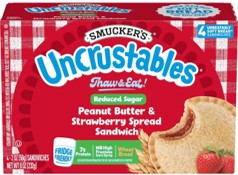
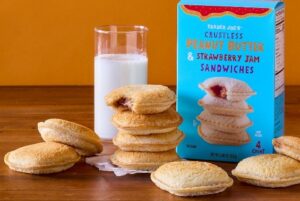
In January 2026, Trader Joe's filed a 12(b)(6) motion to dismiss Smucker’s trademark dilution claim and to transfer venue to the Central District of California. Specifically, Trader Joe's argued that Smucker's failed to sufficiently plead that its Uncrustables design marks are famous, one of the requisite elements to prove trademark dilution. In so doing, they painted the Uncrustables designs as "cartoonish", let alone "no Nike swoosh" and Smucker's allegations as conclusory, such that their complaint fails to prove fame for each of the design marks. See Mot. to Dismiss at 2-4 and 9, J.M. Smucker Co. v. Trader Joe's Co., No. 5:25-cv-02181 (N.D. Ohio Jan. 9, 2026).
In late August 2026, Judge Adams in the Northern District of Ohio handed down its decision, denying the Motion to Dismiss and to transfer Venue to California.
With focus on the "fame" requirement for a trademark dilution claim, the court noted that "a mark must be considered a 'household name'". See Ord. on Mot. to Transfer Venue and Mot. to Dismiss at 3, J.M. Smucker Co. v. Trader Joe's Co., No. 5:25-cv-02181 (N.D. Ohio Aug. 28, 2026) (quoting Coach Servs., Inc. v. Triumph Learning LLC, 668 F.3d 1356, 1373 (Fed. Cir. 2012)). The court also cited to Nike, Pepsi, Camel, Barbie Dolls, and Victoria's Secret, to name a few, as some famous marks with “a strong national presence,” a “significant international presence,” and “market dominance." See id. (internal case citation omitted). The court pointed to several allegations in the complaint, with considerations for the scope of advertising and publicity, sales, the registration status of the marks, and allegations regarding the extent of recognition of the marks, to support its finding that Smucker's sufficiently pled that its Uncrustables design marks are famous and well-known, to ultimately deny Trader Joe's motion, and to allow the case to move forward with discovery.
With this determination made, now begins the substantive aspects of this litigation, where evidence, consumer confusion, distinctiveness of the Uncrustables sandwich designs, and functionality of the parties' designs, are put into focus. It remains to be seen what transpires, but thus far, this case has shown that trade dress protection can extend to packaging and product configuration and shapes, even those with distinctive silhouettes like Smucker’s Uncrustables.
